
Most drivers think of the tire pressure monitoring system as a light on the dash. Behind that light are four small sensors, one inside each wheel, and like a lot of parts on a vehicle, they do not last forever. When a sensor stops working, adding air will not fix it. The sensor itself has to be replaced and the vehicle has to learn the new one.
What is inside the wheel
A typical TPMS sensor is a sealed unit mounted at the valve stem inside the tire. It measures pressure, and on many vehicles temperature as well, and sends that reading to the vehicle by radio signal. It runs on a small battery that is sealed inside the housing.
Because the battery is sealed, it cannot be swapped out on its own. When the battery dies, the whole sensor is replaced. The seal keeps moisture and road contamination out of a part that lives in a harsh place, spinning inside a tire through rain, heat, cold, and potholes.
How long a sensor typically lasts
As a rough rule, most TPMS sensors last about five to ten years, or roughly 100,000 miles, though plenty give out sooner and some last longer. Mileage matters as much as age, because the sensor transmits more often while the vehicle is moving. A vehicle that spends its life on short trips around Glasgow may get more calendar years out of a set than a vehicle that commutes daily to Bowling Green.
Heat, vibration, and corrosion at the valve stem can shorten that life, as can damage during a tire repair. The sensor is a wear item with a finite life, much like a battery under the hood, and should be expected to need attention at some point in a vehicle's second hundred thousand miles.
The light pattern that points to a sensor
A solid TPMS light that comes on and stays on usually means one or more tires are low on pressure. A different pattern points somewhere else.
If the light flashes for about a minute when you start the vehicle and then stays on solid, the vehicle is typically reporting a fault in the TPMS system itself. A dead sensor battery is a common cause. So is a sensor that was damaged, a sensor that was never relearned after a rotation or replacement, or a receiver problem on the vehicle side.
The distinction matters. A low tire can be corrected with air and checked for a leak. A system fault means the vehicle cannot reliably warn you about a low tire at all until the fault is repaired.
What replacement actually involves
Replacing a sensor is more than threading in a new part. The usual steps look like this:
- Confirm which sensor failed. A TPMS scan tool can read each wheel and show which sensor is not transmitting, is transmitting weakly, or is reporting incorrectly.
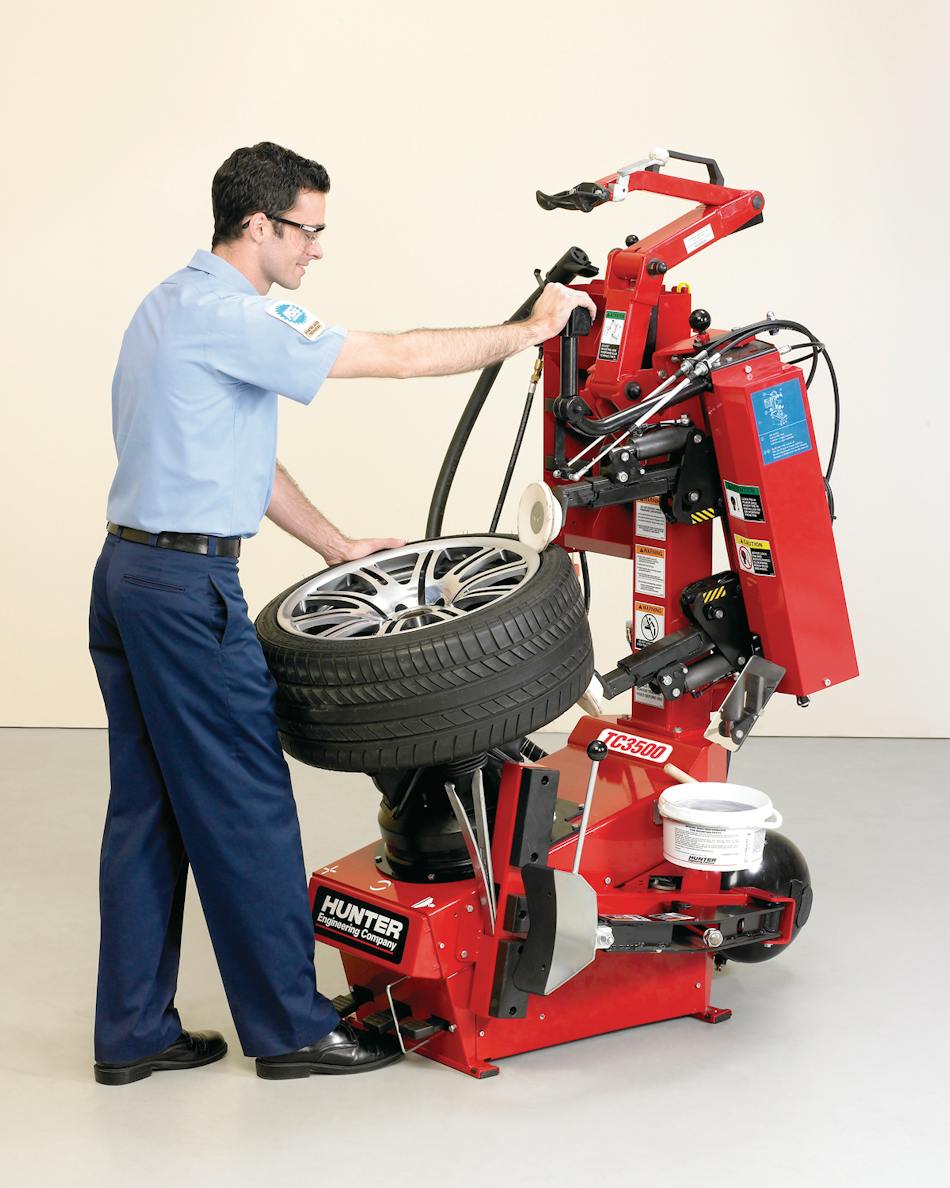
- Break the tire down. The tire comes off the wheel, or at least the bead is broken down far enough to reach the sensor at the valve stem.
- Swap the sensor and service the stem. The old unit comes out, the new sensor goes in, and the seals, nut, and valve core are replaced as part of the job so the new installation does not leak.
- Mount and balance. The tire goes back on and the assembly is balanced, since removing and refitting a tire changes how it sits on the wheel.
- Relearn the system. The vehicle is put through its relearn procedure so it recognizes the new sensor's ID and assigns it to the correct corner of the vehicle.
That last step is the one that gets skipped in casual work, and it shows. Without a relearn, the vehicle may keep the light on or show the wrong tire as low. The procedure varies by make and model — some vehicles learn through a drive cycle, others need a scan tool to trigger each sensor in sequence.
Why all four sensors matter when tires are replaced
New tire day is the natural time to talk about sensors, even if the light is off. If a vehicle is eight or nine years old and still on its original sensors, one dead battery usually means the other three are not far behind. Replacing a failing sensor while the tire is already off is simpler than breaking the tire down again a few months later for the next one.
That does not mean all four should automatically be replaced every time. It means the question is worth answering with a scan, not a guess. A quick read of all four sensors before new tires go on tells you which ones are strong, which are weak, and whether it makes sense to handle one or a full set while the wheels are already apart.
At Southern KY Tire Pros, our ASE-certified techs handle TPMS diagnosis, sensor replacement, and relearn service as part of regular tire work, and walk-ins are welcome. If your light flashes at startup and then stays on, bring it by and we will read the system and show you what it found. You will find us at 1004 Happy Valley Rd, Glasgow, KY 42141 — call (270) 861-2003 or text (270) 320-7359, Monday–Friday 8:00 AM–5:00 PM. Details are on our TPMS Service page.