
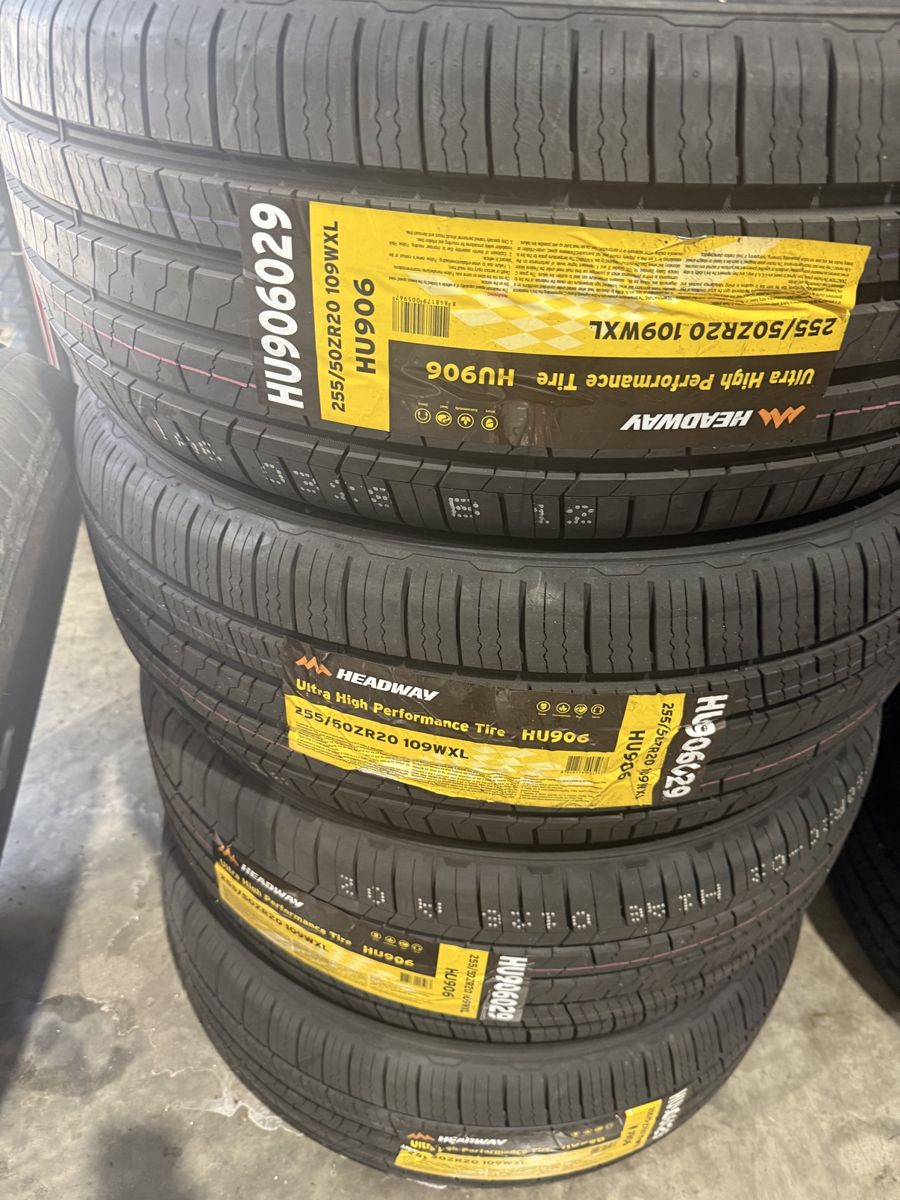
The standard rotation advice was written for standard driving. Kentucky driving is not quite that — four real seasons, freeze-and-thaw winters, gravel county roads, and a lot of I-65 commuting miles out of Barren County. The baseline interval still applies here. What changes is how much you have to gain from keeping it, and how fast uneven wear can get ahead of you if you don't.
The baseline: rotate with the oil change
A common guideline is to rotate with every oil change, or roughly every 5,000–7,500 miles — your owner's manual has the schedule for your vehicle. Pairing the two is practical, not just tidy: the vehicle is already here and up in the air, and the wear pattern on the tires gets looked at while there is still time to do something about it.
What Kentucky roads do to tires
- Winter potholes. Freeze-and-thaw cycles tear up pavement across Barren County every year. A hard pothole hit can knock a weight off or bend a wheel, and the wear that follows shows up first at rotation time.
- Gravel and chip-seal county roads. Loose surfaces scrub tread differently than smooth asphalt, and the front tires doing the steering take the worst of it.
- Four-season temperature swings. Tires flex and wear differently in a Glasgow January than a Glasgow July; rotating on schedule keeps any one pair from eating a full year of the hardest season in the hardest position.
- Commuting miles. Steady highway miles wear tires evenly — until they don't. A small alignment drift that is invisible in town will feather a front tire over a few months of I-65 runs.
A rotation visit is also an inspection
Tread tells the truth. Edge wear points at alignment. Cupping points at balancing or worn suspension parts. One tire wearing faster than the other three points at pressure or a position-specific problem. Reading that pattern early is the difference between correcting a cause and buying tires sooner than you should have to. If the wear says the angles are off, alignments here start at $89.99 on most vehicles.
Front, rear, and all-wheel drive
Front-wheel-drive vehicles wear their front tires fastest — they steer, drive, and do most of the braking. All-wheel-drive vehicles care about rotation for a different reason: the tires need to stay close in diameter to each other, and skipping rotations lets them drift apart. Either way, the manual's pattern and interval are the ones to follow.
What skipping it costs
Rotation does not add tread. What it does is spend the tread you already bought evenly. Skip it long enough and the front pair is worn out while the rears still have life in them — and then the choice is replacing two tires early or running a mismatched set. Staying on schedule also keeps all four tires close enough in wear that when replacement time does come, it comes for the set, on your timing, instead of for one pair, on the road's timing. If you cannot remember the last time yours were rotated, that is the answer: it has been too long, and the next oil change is the time to fix it.
Southern KY Tire Pros rotates, balances, installs, and repairs tires at 1004 Happy Valley Rd, Glasgow, KY — walk-ins welcome Monday–Friday, 8:00 AM–5:00 PM, or call (270) 861-2003. The service details are on our Tire Rotation page.