
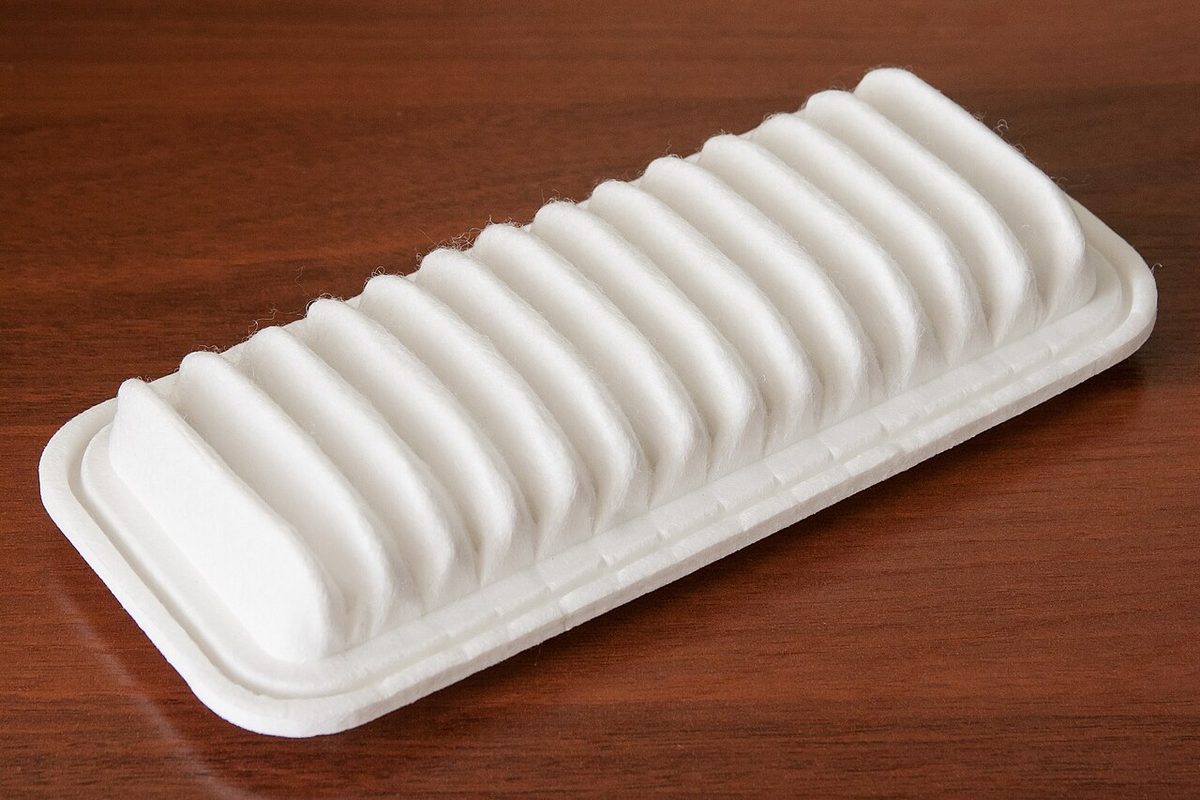
Most vehicles carry two air filters, and they get mixed up constantly — sometimes even on the same invoice conversation. The engine air filter cleans the air the engine breathes. The cabin air filter cleans the air you breathe, the air coming through the vents into the seats. They live in different places, load up at different rates, and fail in different ways. Here is how each one works, what a spent one looks and feels like, and why Barren County driving is harder on both of them than the interval printed on the box assumes.
The engine air filter: the engine's only line of defense
Every gallon of fuel an engine burns takes a large volume of air with it, and all of that air passes through one pleated filter element first. Its job is simple and unforgiving: stop dust, grit, and debris before they reach the inside of the engine, because dirt is an abrasive no internal part was designed to swallow. A clean element passes air freely and shows its pleats. A spent one comes out grey-brown, heavy with the dust it has caught, and sometimes carrying the seeds and debris a gravel driveway contributes.
As the element loads up, the engine works harder for every breath. The signs arrive gradually: fuel mileage drifting down, throttle response going dull, acceleration that feels lazier than it used to. Push a clogged filter far enough and the check engine light that eventually appears rarely says "filter" — it reports a mixture problem downstream of the real cause. Our Air Filters page covers how the check itself works.
The cabin air filter: the one your nose notices first
The cabin filter sits in the ventilation path, cleaning the outside air before it reaches the heater, the air conditioning, and your face. When it is fresh, most drivers never think about it. When it is spent, it announces itself inside the car: a musty smell when the A/C or heat kicks on, airflow that feels weak even with the fan on high, windows that fog and clear slowly, and a dust film on the dash that keeps coming back. Trapped moisture in a loaded filter is where that musty vent smell breeds.
For anyone with allergies, this filter matters more than most parts on the car. A spent cabin filter turns the vehicle into a rolling sample of pollen season instead of a refuge from it — and a loaded one also chokes the defroster, which makes it a visibility issue on a damp morning, not just a comfort issue.
Why Barren County loads filters faster
The replacement interval on the box assumes average driving. South-central Kentucky is not average on filters. Gravel roads throw fine dust into the air a vehicle breathes all year. Planting and harvest season put field dust over whole stretches of Barren County at once. Spring pollen coats everything parked outside. A driver who covers gravel driveways and county roads daily can load both filters well ahead of the generic schedule — which is why the honest check is not the calendar or the mileage alone. The filter comes out, gets held to the light, and grades itself: a clean element passes light and shows its pleats; a spent one is matted and dark. You can look at it too — that is the whole point of a part this easy to inspect.
When to have them looked at
Filters are genuinely checked here at oil changes, and neither one gets sold before it is dirty. If you cannot remember either filter ever being changed, that unknown is the finding — pull them and look; it takes a minute and the filters themselves give the verdict. Mileage complaints and sluggish response sometimes trace back to the engine filter, which is also why filters belong to the tune-up family: an engine cannot run its best breathing through a clogged element. Our Scheduled Maintenance page shows where filter checks sit in the full maintenance picture, and our Oil Changes page covers the visit where the check usually happens.
Getting them checked in Glasgow
Southern KY Tire Pros is a family-owned repair shop in Glasgow at 1004 Happy Valley Rd, across from Don Franklin on Happy Valley Rd. Our ASE-certified techs check both filters as part of everyday maintenance, and qualifying work is backed by the Tire Pros Nationwide Service Warranty — 24 months/24,000 miles parts and labor on qualifying services. Walk-ins are welcome. Call (270) 861-2003 or text (270) 320-7359, Monday–Friday 8:00 AM–5:00 PM, closed Saturday and Sunday.