
Almost every driver knows engine oil has a schedule. Far fewer think about the other fluids doing quiet work every mile — and none of them come with a dashboard warning light that says they are worn out. Brake fluid, coolant, and power steering fluid all age on heat and miles, and by the time one of them makes itself known, it usually does it through a symptom instead of a reminder. Here is what each one does, how it wears out, and how to tell where yours stand.
Brake fluid: the one that absorbs water just sitting there
Brake fluid is hygroscopic — it absorbs moisture from the air continuously, even in a sealed system. That matters for two reasons. Moisture lowers the fluid's boiling point, and under hard or repeated braking the heat in the system can boil moisture-loaded fluid sooner, which is when a pedal starts to feel soft or spongy. Moisture also corrodes brake components from the inside — calipers, lines, and valves that were never meant to sit in water.
Fresh brake fluid is clear to light amber. Old fluid goes dark, and darkness alone is a clue, but the real check is a moisture test — the fluid gets tested for the water it has absorbed, not just looked at. If your pedal feels soft, if the fluid in the reservoir looks dark, or if you simply do not know when it was last changed, that unknown is itself the finding. Our Brake Repair page covers the whole-system look that goes with a brake fluid check.
Coolant: it is not just antifreeze, and its protection runs out
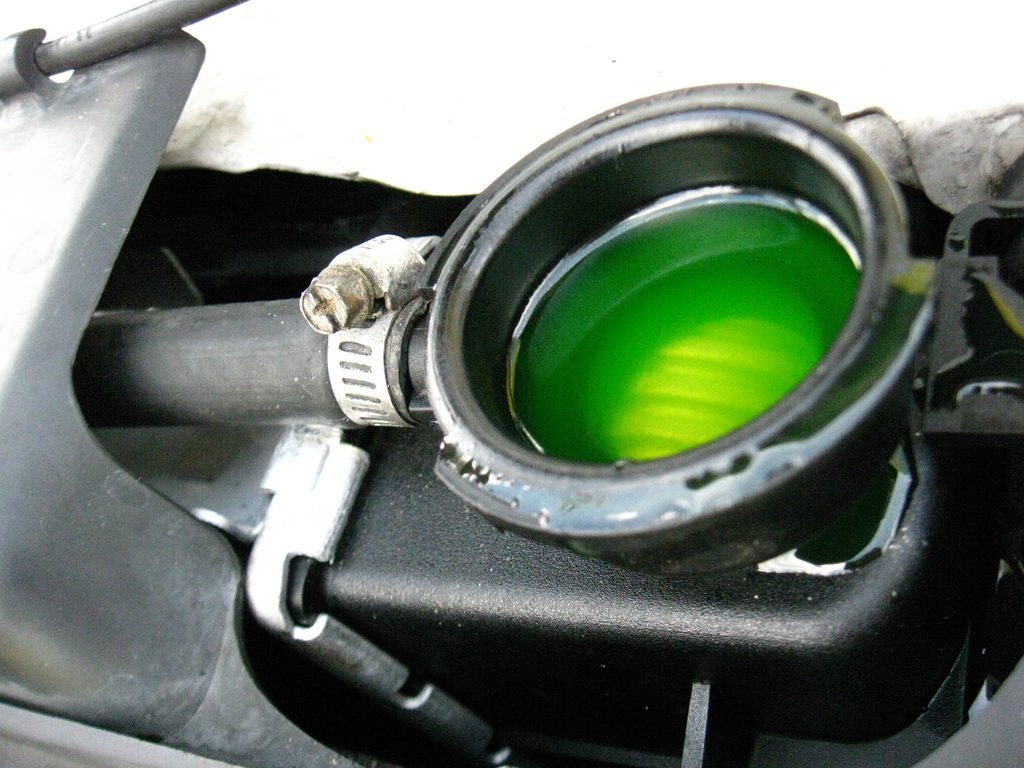
Coolant does two jobs at once: it carries heat away from the engine, and it protects the inside of the cooling system with corrosion inhibitors. The heat-carrying part lasts a long time. The protection part does not — the inhibitors deplete with heat and miles, and old coolant gradually stops protecting the system it circulates through. That is how radiators, water pumps, and heater cores corrode from the inside while the temperature gauge still reads normal.
Signs coolant service belongs on the list: the coolant looks rusty or muddy instead of its original color, the level keeps dropping (coolant does not evaporate — low means a leak or a system using what it should not), or the service history is a blank. Coolant strength and protection level can be tested, so the answer does not have to be a guess. Our Cooling System Service page walks through what that system check covers.
Power steering fluid: listen for the pump asking for help
On vehicles with hydraulic power steering, the fluid works the pump and the rack on every turn — and Barren County driving means a lot of turns, from Glasgow parking lots to winding county roads toward Cave City. Power steering fluid breaks down with heat and miles and picks up fine material from normal wear. Fresh fluid is clean and translucent; worn fluid comes out dark and gritty.
The symptom drivers notice first is sound and feel: a groan or whine when you turn at low speed, or steering that feels stiffer than it used to. Both can point at the pump — but fluid condition gets checked before anyone blames the pump itself, because worn, contaminated fluid does not lubricate the way it should, and sometimes the fluid is the story. Electric power steering systems do not use this fluid at all, which is one more reason the check starts with what your vehicle actually has.
The fluids nobody mentions at all
A truck or SUV carries more working fluids than the familiar ones. The differential runs on gear oil that coats the ring and pinion under every load, and four-wheel-drive vehicles add a transfer case with fluid of its own. Transmission fluid belongs on the same list: heat and miles break it down, and fluid that has gone dark and burnt-smelling has worked past its best. Towing and hill work shorten all of these timelines — holding a load on south-central Kentucky grades keeps fluids at high temperature far longer than flat commuting does, and heat is what ages fluid fastest.
One honest limit worth stating plainly: fresh fluid is maintenance for a healthy system, not a repair for a worn one. A fluid change will not fix a transmission that already slips or a pump that is already failing — those need diagnosis, and a good shop will tell you straight which situation you are in.
How to find out where yours stand
You do not need to guess, and you do not need to approve a list of flushes on faith. A fluid inspection follows a set order: levels first, because a low level is a finding by itself; then color and smell; then tests where tests exist — brake fluid for moisture, coolant for the protection it has left. The results sort into due now, coming due, and fine, with the sample or test strip there to look at. Anything that is due gets matched to the exact fluid specification your manufacturer calls for, because modern transmissions and transfer cases are particular about the fluid they run on. The maintenance schedule in your owner's manual is the baseline, and if you bought the vehicle used with no fluid history, a baseline inspection sets the clock from today. Our Fluids & Flushes page covers the full check.
Getting it checked in Glasgow
Southern KY Tire Pros is a family-owned repair shop in Glasgow at 1004 Happy Valley Rd, across from Don Franklin on Happy Valley Rd. Our ASE-certified techs check fluids as part of everyday maintenance, and qualifying work is backed by the Tire Pros Nationwide Service Warranty — 24 months/24,000 miles parts and labor on qualifying services. Walk-ins are welcome. Call (270) 861-2003 or text (270) 320-7359, Monday–Friday 8:00 AM–5:00 PM, closed Saturday and Sunday.